
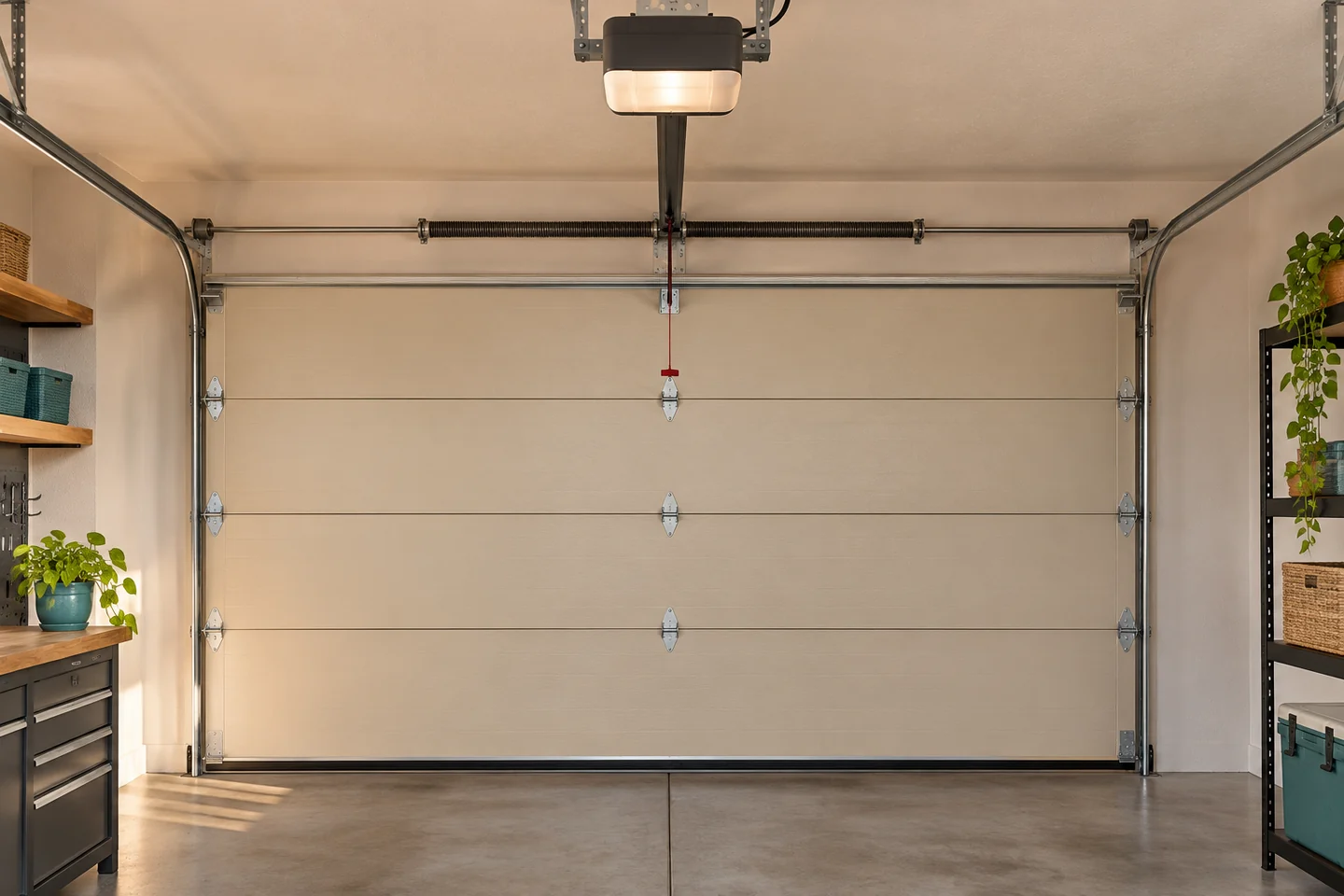
Start with the failed part.
Ask which component is causing the trouble and how it was identified. The door, tracks, springs, cables, opener and controls work together, so the symptom you notice may not point directly to the faulty part.
Separate necessary work from extras.
Find out what is needed to restore normal operation. Then consider optional features or changes separately. A quieter opener or a new outside keypad may be useful, but it should be clear when you're discussing an upgrade.
Compare the complete scope.
A repair quote and a replacement quote can include different parts, labor and follow-up work. Ask what each covers and whether other existing components remain in use. Clarify any warranty terms with the provider rather than assuming they are all the same.
Keep safety out of the experiment.
Do not adjust springs or cables or try to release a damaged, crooked or stuck door. Keep the opening clear and leave those checks to a technician. You can describe a visible symptom without testing it repeatedly.
Ask for a plain explanation.
A useful answer should make sense without a long parts list: what failed, why the proposed work addresses it and what the result should be. If you don't understand the recommendation, ask for the explanation before approving the work.