
1. Walk through the entrances.
Include the front door, side door, security door and door from the garage. Note which key works where. If a lock sticks or a handle is loose, add that to the list. A new key combination will not fix every hardware fault.
2. Decide what can stay.
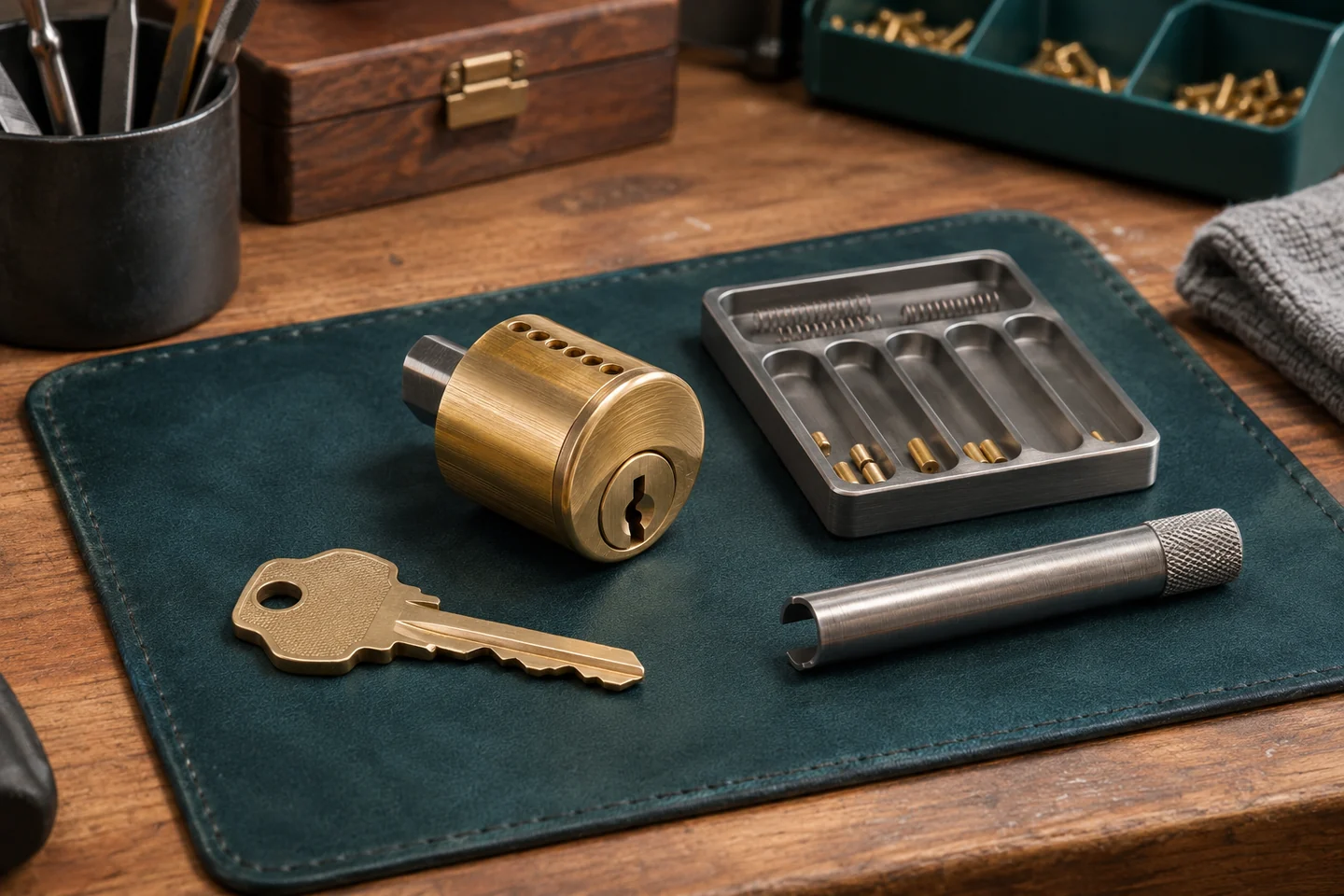
Suitable locks can often be rekeyed so the old keys no longer work. That may let you keep hardware you like. Mixed key systems or damaged parts can change the plan. Ask about the condition and compatibility before choosing replacements.
3. Review electronic access separately.
Opener remotes, outside keypads and smart-lock codes aren't changed by rekeying a mechanical cylinder. Identify the equipment and follow the manufacturer's process for managing access. Ask for help where the system or permission is unclear.
4. Include the people who live there.
Check that everyone can use the handle and inside turn comfortably. Decide who needs a key and where a spare belongs. If guests will use a code, someone needs to manage it rather than leaving the same code in place indefinitely.
5. Test the result.
Try the new keys at each changed lock and confirm that the old keys no longer work there. Test any controls included in the work. Keep a simple record of what changed; you don't need to store access codes in a shared moving checklist.